
 English


A metal garden fence can do far more than mark the edge of a yard. It can frame planting areas, create a safer boundary, support climbing plants, guide visitors toward an entrance, and bring a finished architectural look to a landscape. The most successful designs start with the garden’s purpose: privacy, pet control, plant support, pool separation, visual screening, or simple border definition. This guide explores metal garden fence ideas that balance durability, appearance, maintenance, and practical installation needs for residential and commercial landscape projects.
Choose a metal garden fence according to the garden’s function, not only its visual style.
Aluminum is a practical option for corrosion resistance and lower maintenance in many outdoor settings.
Decorative panels and trellis-style sections can add structure without making a small garden feel enclosed.
Gates should match the fence style while remaining easy to use and appropriately sized.
Posts, connectors, finishes, and drainage are important to the long-term appearance of a garden fence.
A garden fence can be decorative, functional, or both. Before choosing a pattern, color, or material, decide what the fence needs to achieve.
A low ornamental boundary may separate a flower bed from a lawn. A taller fence may provide privacy around a patio or define the edge of a residential garden. In a larger property, the fence may help manage access between landscape zones, keep pets out of planted areas, or create a transition from driveway to garden.
The most common purposes include:
Garden objective | Suitable metal fence approach |
|---|---|
Define borders | Low open picket or decorative panels |
Create a formal entrance | Matching gate, posts, finials, symmetrical layout |
Support climbing plants | Metal trellis panels or open rail sections |
Improve privacy | Closer-spaced pickets or layered planting with fence panels |
Protect a garden area | Taller fence with secure gate and durable posts |
Add architectural detail | Decorative panels, scrollwork, custom accents |
A well-designed fence should make the outdoor space easier to use. It should not block a view that the garden depends on or create a maintenance burden that was not considered at the planning stage.
An aluminum garden fence is popular for modern and traditional landscapes because it is lightweight, corrosion resistant, and available in clean, open designs. It can provide a defined boundary while allowing light and airflow through the garden.
Matte black aluminum is a common choice because it can visually recede behind green planting and work with many exterior styles. Bronze, gray, and custom colors may be appropriate when a garden is designed around specific hardscape materials, window frames, railings, or gates.
For a modern garden, use straight vertical pickets, square posts, and simple caps. Keep the design consistent with the house and avoid adding too many decorative elements. A clean aluminum fence can create order around gravel paths, raised beds, outdoor dining areas, and structured planting.
For a softer garden style, combine the fence with layered planting. Shrubs, ornamental grasses, flowering perennials, and climbing plants can make the metal boundary feel integrated rather than separate. Leave enough clearance between plants and panels for cleaning, pruning, and inspection.
Aluminum fencing is also useful where soil or humidity can contribute to corrosion concerns. However, the selected alloy, finish, hardware, and installation details should still suit the environment. Any outdoor fence benefits from periodic checks for loose fittings, coating damage, and ground movement.
Decorative garden fence panels can serve as focal points, not just barriers. A patterned panel placed behind a bench, beside a garden path, or near an entry can add visual structure even when the rest of the fence uses a simple picket design.
There are several effective ways to use decorative panels:
Use one or two decorative panels at the end of a sightline, behind a water feature, or at the edge of a seating area. The panel becomes a backdrop for climbing plants, container gardens, or outdoor lighting. This approach works particularly well in narrow gardens where a full-length decorative fence could feel busy.
Decorative panels can flank an aluminum garden gate and make the entry feel intentional. Use the same color and compatible post details so the gate does not appear to be added later.
A semi-open panel can separate a dining area from a vegetable garden or a children’s space from a planting zone without completely closing off the view. This can be valuable in hospitality, community, and residential developments where landscape areas have multiple uses.
A long metal fence may look more balanced when decorative sections are repeated at intervals. The spacing should follow the rhythm of posts, planting beds, or architectural features rather than being inserted randomly.
Weijiang Metal’s decorative metal fence panel ideas provide additional context for comparing aluminum, steel, and wrought iron-style panel applications in outdoor projects.
Metal trellis panels are a practical way to add height and seasonal interest to a garden. They can support suitable climbing plants while helping divide spaces and improve privacy gradually as planting matures.
A trellis can be attached to a wall, installed as a free-standing screen, or integrated into a metal fence. When used as part of a boundary, confirm that the panel and posts can carry the expected plant load. Mature climbers can add significant weight, especially after rain or during windy conditions.
Choose plant species carefully. Vigorous climbers may require regular pruning to prevent excessive loading or restricted airflow. Avoid allowing dense vegetation to trap moisture against the fence for long periods, especially around joints and lower rails.
Metal trellis panels are especially useful in compact gardens because they use vertical space rather than taking up planting area. They can soften a wall, hide a service area, create a green backdrop, or frame a path. A simple black metal trellis with flowering or evergreen climbers can work across many garden styles.
If a trellis is part of a fence line, maintain access to the rear of the panel whenever possible. This makes it easier to inspect connectors, clean surfaces, and manage plant growth.
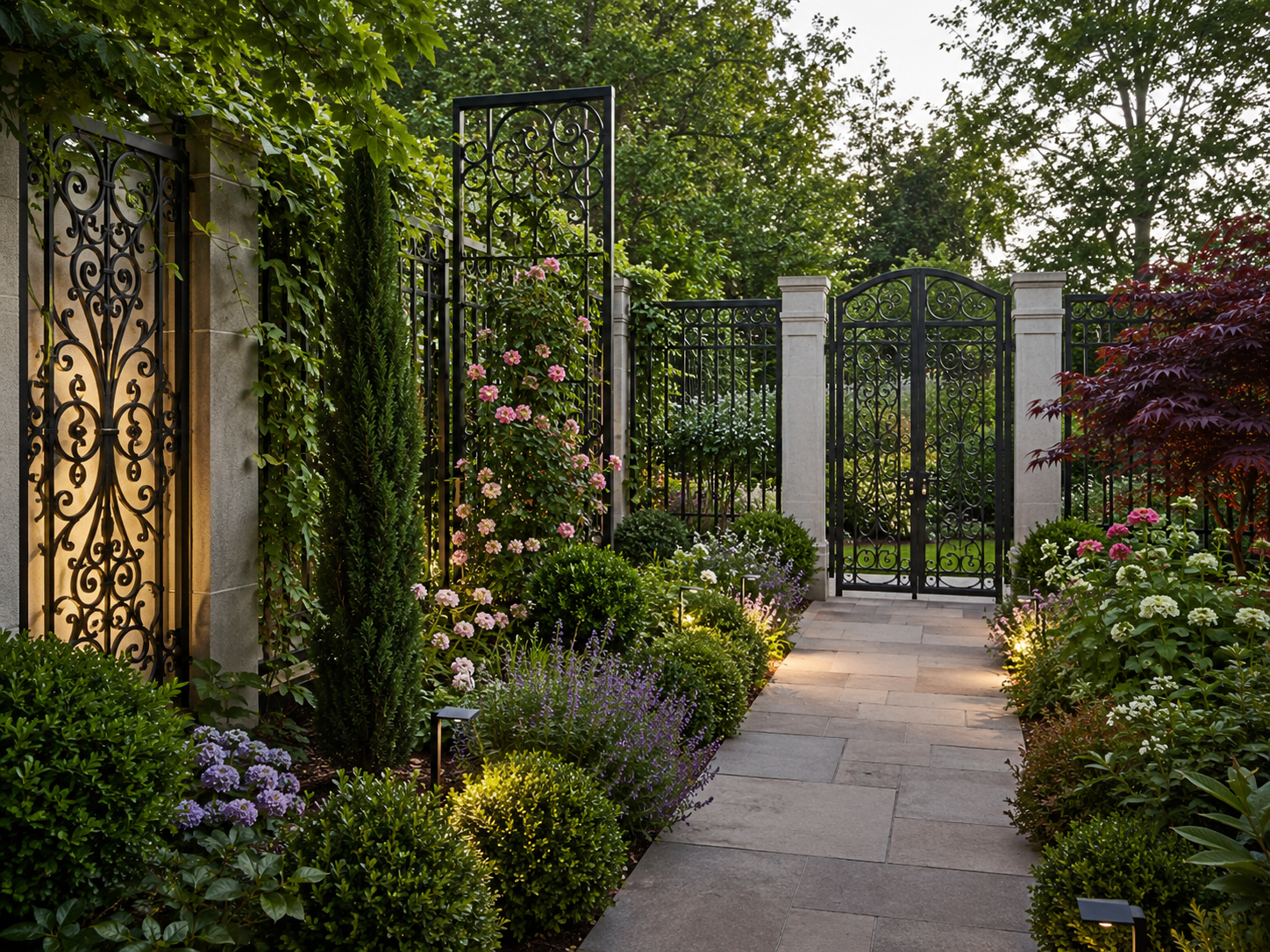
Garden decorative panels are often chosen because they create partial screening while preserving light and visual interest. Instead of using a fully solid wall, a perforated, patterned, slatted, or openwork panel can create a sense of enclosure without making a garden feel smaller.
Privacy is not only about blocking every view. In many projects, it is enough to interrupt direct sightlines from a neighboring window, driveway, or pedestrian path. A carefully placed panel near a seating zone can provide more useful privacy than a tall fence around the entire property.
Layering is a valuable design strategy. Combine the metal panel with planting, planter boxes, outdoor furniture, or a pergola. The fence remains durable and easy to clean, while the landscape softens the visual effect.
For projects that require more robust outdoor components, use compatible posts and connectors rather than mixing unrelated parts. The metal fence product range includes fencing accessories that can support coordinated boundary and landscape solutions.
A wrought iron fence style is often associated with classic gardens, heritage-inspired homes, formal entrances, and ornamental landscapes. In modern projects, the term may describe the visual style rather than traditional hand-forged construction.
The appeal comes from vertical pickets, decorative top details, scrolls, finials, and a strong sense of rhythm. This style can complement stone paths, brick walls, mature trees, formal hedges, and traditional gates.
Use ornate elements selectively. A highly detailed fence can become visually overwhelming in a small garden or compete with colorful planting. One effective approach is to use a more decorative gate or entrance panel while keeping the main fence line simpler.
Traditional-style fences also benefit from thoughtful proportion. Fence height, picket spacing, post size, and gate width should relate to the scale of the house and garden. A low fence around a cottage garden can feel inviting, while a taller boundary around a large estate may need more substantial posts and a more formal gate design.
An aluminum garden gate should be planned alongside the fence rather than selected after installation. It needs to fit the intended opening, traffic type, latch arrangement, and visual style.
For a pedestrian garden entrance, confirm the clear opening is comfortable for everyday access, garden tools, bins, or wheelbarrows where relevant. For a side yard or service area, check that the gate can open fully without hitting planting, walls, drainage features, or parked vehicles.
Gate alignment is important. Poorly set posts can cause a gate to sag, bind, fail to latch, or drag on the ground. The hinge side and latch side should be designed for the expected use, and the gate frame should match the panel height and profile.
For pool-adjacent garden areas, gate selection must also follow applicable local safety rules. Self-closing and self-latching requirements differ by market and jurisdiction. Always confirm the local regulation before finalizing a design.
A compatible metal fence connector for garden boundaries can help create stable rail-to-post connections where the selected hardware is designed for the relevant fence profile.
A metal garden fence should complement the garden in every season. Black is versatile because it often fades visually behind foliage. White can feel traditional and bright but may show dirt more easily. Bronze and dark gray can work well with stone, timber, and contemporary exteriors.
Powder coating is commonly used for outdoor metal components because it can provide a uniform finish and broad color options. The quality of surface preparation and coating application matters as much as the chosen color. Scratches or chips should be addressed before moisture reaches the base material.
When selecting finishes, consider:
The home’s window frames, doors, railing, or roof color
Nearby hardscape materials such as stone, paving, brick, or decking
Seasonal foliage and flower colors
Sun exposure and visible dust
The need for touch-up after installation
Whether gates, posts, panels, and hardware will have a consistent finish
Avoid selecting colors only from a small sample. View larger coated samples outdoors if possible, because sunlight can change the way a finish appears.
Garden installations often involve uneven terrain, irrigation, planting beds, drainage, and limited access. These conditions should be considered before materials are ordered.
Confirm the fence line and gate location before excavation. Check for underground irrigation, electrical lines, drainage pipes, or roots. On sloped ground, determine whether the fence will step down in sections or follow the grade with a raked panel configuration.
Posts must be set securely and consistently. A beautiful decorative panel will still look poor if the posts lean, gates do not align, or panel heights vary. Avoid forcing panels into a slope if the system is not designed for it.
Keep the lower fence area clear of mulch buildup, soil, and dense planting. Moisture held against metal components can make cleaning and inspection more difficult. Use appropriate post caps or covers to create a finished appearance and protect compatible profiles from debris accumulation.
Metal garden fencing requires less upkeep than many wood systems, but regular attention supports a longer service life.
Clean the panels periodically with water and a mild cleaner suitable for the finish. Rinse away soil, fertilizer residue, and plant debris. Inspect hinges, latches, connectors, post caps, and lower rails at least seasonally.
Trim plants away from moving gate parts. Check that vines are not pulling on panels or concealing corrosion, loose fasteners, or cracks in the coating. If a panel is damaged by garden equipment, repair it promptly rather than allowing the problem to spread.
For buyers comparing long-term material options, Weijiang Metal’s article on the lifespan of a metal fence offers a useful starting point for evaluating material and finish decisions.
A thoughtfully selected metal garden fence can make an outdoor space feel organized, secure, and complete. Aluminum garden fencing, decorative panels, trellis features, traditional wrought iron-style details, and compatible gates each provide different ways to define a landscape.
Begin with the purpose of the boundary. Then select a material, design, finish, gate, and installation method that fit the garden’s scale and climate. By treating the fence as part of the landscape rather than an isolated product, Cangzhou Weijiang Metal Products Co., Ltd. can help buyers source compatible fence components that support a more durable and coordinated outdoor result.
Aluminum is suitable for many gardens because it is lightweight, corrosion resistant, and available in clean decorative designs. The final choice should still consider fence height, site exposure, hardware, gate loads, and local requirements.
Yes, if the panel and supporting posts are designed for the expected plant load. Choose plants carefully, prune them regularly, and avoid allowing heavy growth to place excessive stress on the fence.
Use a suitable powder-coated color, add planting in front of selected sections, incorporate decorative panels, choose a complementary gate, and match the fence design to the garden’s hardscape and architecture.
It can be, especially when the design is simple and proportionate. In a small garden, use ornamental details sparingly so the fence does not visually overwhelm planting and outdoor living areas.
Confirm the opening width, swing direction, path clearance, hinge and latch arrangement, post strength, and local safety requirements. Plan the gate with the fence system rather than treating it as a separate item.
Wash away dirt and plant residue, inspect coating damage, tighten loose hardware, trim vegetation away from joints, and repair scratches or chips according to the supplier’s finish-maintenance guidance.


