
 English
 Views: 0 Author: Site Editor Publish Time: 2026-08-10 Origin: Site


Upgrading your property perimeter requires balancing aesthetics, security, and long-term upkeep. An aluminum fence offers a high-return, low-maintenance alternative to traditional wood, vinyl, and wrought iron. It delivers classic elegance without the constant need for scraping, painting, or rust treatments.
You might have already found aesthetic inspiration online. Moving from vision to reality involves complex decisions. Buyers must evaluate structural grades, navigate strict compliance codes, and understand installation variables. Making the wrong choice can lead to structural failure, HOA fines, or costly replacements down the line.
This guide provides a transparent look at how to properly specify, budget for, and install these systems. We will cover everything from selecting the right components to avoiding local building code violations. You will learn exactly how to build a lasting boundary without overpaying or compromising on safety.
Understanding the metallurgical advantage of aluminum helps justify the initial material investment. Unlike steel or wrought iron, aluminum does not rust. When exposed to oxygen, it forms a microscopic layer of aluminum oxide. This natural chemical reaction creates a protective shield against moisture. It makes the material ideal for coastal environments or regions with heavy snowfall.
Industrial powder coating further enhances this durability. Manufacturers apply dry powder to the metal and bake it in a high-temperature oven. This process fuses the color directly to the surface. It prevents fading, peeling, and chipping. A properly powder-coated surface easily outperforms traditional liquid paint. You rarely need to touch up the finish, even after years of harsh sun exposure.
Wood fences demand continuous attention. They require staining, sealing, and eventual board replacements due to rot or termite damage. These recurring tasks drain your time and wallet. Aluminum systems eliminate these burdens entirely. You simply wash them down with a garden hose once a season. This lack of ongoing labor preserves your weekend and significantly reduces long-term expenses.
While aluminum excels in weather resistance, we must address its physical constraints. Aluminum is a lighter metal. It carries a higher "dent factor" than solid steel or heavy wrought iron.
Securing a swimming pool demands strict adherence to local safety codes. Most municipalities follow B.O.C.A. (Building Officials and Code Administrators) guidelines. An aluminum pool fence provides a rigid, transparent barrier that meets these exact standards.
Compliance usually dictates a minimum height of 48 inches. The bottom rail must sit flush to eliminate footholds. Children cannot easily scale a flush-bottom design. Additionally, the gates require self-closing hinges and self-latching mechanisms. You must install the latch mechanism at a specific height, keeping it well out of a toddler's reach. Always consult your local building inspector before finalizing your pool enclosure design.
Protecting a garden or securing a pet requires different structural considerations. Standard picket spacing often measures around nearly four inches. Small dogs can slip right through these gaps. To solve this, manufacturers offer "puppy panel" configurations. These designs feature closely spaced pickets along the bottom third of the fence.
An aluminum garden fence also integrates beautifully with landscaping. The narrow pickets disappear into the background. They protect your flower beds from deer without obstructing your view of the property. You maintain open sightlines while establishing a secure, functional boundary.
Transitioning from a basic boundary to a secure perimeter involves robust entry points. Property owners frequently pair standard line fencing with heavy-duty aluminum driveway gates. These gates feature thicker wall profiles to withstand daily operation.
Modern driveway gates integrate seamlessly with smart access control systems. You can equip them with motorized operators, digital keypads, and smartphone-enabled cameras. Ground-loop sensors detect exiting vehicles, automatically opening the gates as you leave. This ecosystem provides high-level security while maintaining a cohesive aesthetic across your property lines.
Ordering materials requires understanding how panels interact with your landscape. Property lines rarely stay perfectly flat. You must choose between rackable panels and solid, stepped panels. Rackable aluminum fence panels pivot at the rails. They follow the slope of your terrain smoothly. This eliminates the awkward gaps underneath the fence that occur when you step rigid panels down a hill.
You also need to select the appropriate grade. Residential grades feature thinner rails and smaller pickets, perfect for standard backyards. Commercial grades utilize thicker extrusions and wider pickets. They offer increased rigidity for public spaces or properties containing large, energetic dogs.
Grade Comparison Chart
| Feature | Residential Grade | Commercial Grade |
|---|---|---|
| Typical Picket Size | 5/8" square | 3/4" square |
| Typical Rail Size | 1" x 1" | 1.25" x 1.5" |
| Wall Thickness | Standard (.040" - .050") | Heavy (.050" - .065") |
| Best Use Case | Backyards, Gardens, Pools | Public Pools, High-Traffic Areas |
Color choice dramatically impacts your home's curb appeal. A black aluminum fence remains the undisputed industry standard. Black acts as a neutral frame in landscaping. The eye naturally looks past the dark pickets, maximizing visibility. It fits equally well with modern minimalist architecture and traditional colonial homes.
Alternatively, a bronze aluminum fence offers a softer, warmer aesthetic. The metallic brown undertones blend effortlessly with natural stone patios. Bronze provides an excellent choice for heavily wooded lots or historical properties. It complements natural surroundings rather than creating a stark visual contrast.
The top of your fence dictates both its style and safety. Flat-top rails provide a clean, modern look. They act as a smooth handhold, making them the safest choice for pool enclosures. Pressed spears, on the other hand, extend above the top rail. They offer a classic wrought-iron aesthetic. More importantly, pressed spears serve as a physical deterrent, making the fence significantly harder to climb.
Budgeting starts with understanding linear foot pricing. Material costs fluctuate based on aluminum market rates, but baseline estimates help you plan.
Labor charges depend heavily on your geographic location and soil conditions. Installers must dig post holes, align the panels, and pour concrete.
Regional frost lines dictate how deep these holes must go. In northern climates, contractors must dig 36 to 42 inches deep to get below the frost line. If they ignore this rule, freezing moisture will heave the posts upward over the winter. Digging deeper requires more labor and significantly more concrete per hole, driving up your final bill.
Many homeowners underbudget by only calculating standard line panels. Fences require specialized components that cost considerably more than basic parts.
Before purchasing any materials, you must clear administrative hurdles. Homeowner Associations (HOAs) frequently enforce strict guidelines regarding fence height, style, and color. Black flat-top designs generally pass HOA reviews easily, but you must obtain written pre-approval.
Next, submit your property surveys to the city to secure a building permit. Finally, you must contact your local utility marking service (often by dialing 811 to "Call Before You Dig"). Striking a buried gas or power line during post excavation can result in catastrophic injuries and massive financial liability.
Best Practice: Always use rackable panels for uneven ground. They adjust on site to match the exact pitch of your yard.
Common Mistake: Attempting to "step" solid panels down a slope. Stepping creates large, triangular gaps beneath the bottom rail. Small pets easily escape through these gaps, and nuisance wildlife can enter. If your terrain drops severely, you might need custom double-punched panels to achieve the necessary rackability.
Hiring the right installer protects your investment. Do not simply accept the lowest bid. Evaluate contractors based on their warranty structure.
You must separate the manufacturer's warranty from the contractor's warranty. Reputable manufacturers guarantee their powder coating against peeling or cracking for decades. However, this does not cover poor workmanship. Your installer should provide a written labor warranty. This labor guarantee covers issues like gates falling out of alignment or posts heaving out of the ground after a harsh winter. Verify these documents before signing a contract.
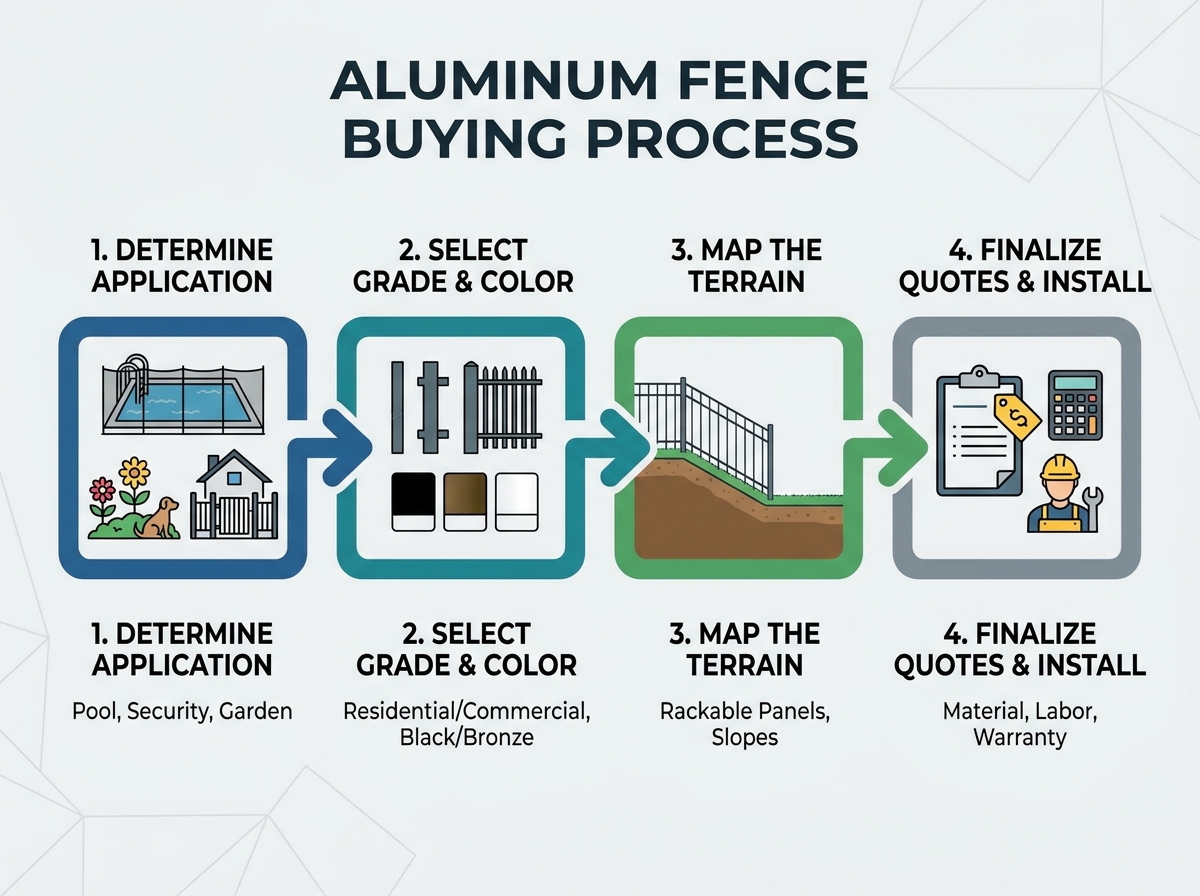
Selecting and installing the right perimeter system involves a logical sequence of decisions. First, determine your primary application, whether it centers on pool safety, pet containment, or driveway security. Next, select the structural grade and color that best align with your home's architecture. Map your terrain carefully to accommodate slopes and identify potential installation obstacles. Finally, finalize your quotes by accounting for hidden costs like custom gates and specialty posts.
Your next step is to move from planning to action. Request physical material samples from suppliers to compare finish quality and metal thickness. Download a property measuring guide to calculate your linear footage accurately. Once you have a clear layout, schedule a site assessment with a vetted, licensed installer to lock in your project parameters.
A: Yes, but you must use highly rackable panels. Standard rackable panels adjust to moderate slopes. For exceptionally steep hills, you may need double-punched panels that allow for extreme pivoting. Avoid stepping rigid panels, as this creates large gaps beneath the fence.
A: Yes. However, for large or aggressive dogs, you should upgrade to commercial-grade materials. Commercial panels feature thicker rails and larger pickets that resist bending. Additionally, select a style with closer picket spacing if your dog tends to squeeze through standard gaps.
A: You can, but it proves difficult. Factory powder coating creates a slick, baked-on surface. Standard paint will not adhere to it easily. You must thoroughly scuff the entire surface, apply a specialized etching primer, and then use high-grade exterior metal paint.
A: As a general rule, you should set posts 30 to 36 inches deep. However, local frost lines ultimately dictate the depth. You must dig below the frost line to prevent winter ground-heave from pushing your posts out of alignment.


