
 English
 Views: 0 Author: Site Editor Publish Time: 2026-09-04 Origin: Site


A metal security fence is more than a visible boundary. For commercial, industrial, residential, and public properties, it is part of a wider perimeter strategy that controls access, defines usable space, protects assets, and supports daily operations. The right system depends on the real risk, site layout, local rules, maintenance capacity, and desired appearance. This guide explains how to compare metal materials, panel styles, gates, finishes, and hardware so buyers can specify a practical fencing solution instead of choosing only by height or initial price.
A metal security fence should be selected according to the site’s risk level, visibility needs, access points, and environmental exposure.
Security depends on the complete system: panels, posts, rails, connectors, foundations, and gates must work together.
Steel provides strong impact resistance, while aluminum is valued for corrosion resistance and lower maintenance.
Anti-climb panel geometry, secure gates, and tamper-resistant connections matter more than decorative details on higher-risk sites.
A clear specification and regular inspection help protect the long-term value of a metal fence.
A metal security fence is a perimeter system made from metal panels, pickets, mesh, posts, rails, gates, and fastening hardware. Its role is to create a controlled physical boundary around a property, equipment area, yard, facility, or access route.
Unlike a temporary barrier, a permanent fence system must resist weather, routine impact, attempted intrusion, movement at connection points, and stress transferred through the posts. Its effectiveness comes from the way each component is designed and installed. A strong panel connected to weak posts or an unsecured gate will not provide reliable site security.
The term can include several styles:
Fence style | Typical strengths | Suitable applications |
|---|---|---|
Steel picket fencing | Rigid, visible, formal appearance | Commercial properties, schools, communities |
Welded or mesh panel fencing | Wide coverage, visibility, adaptable security level | Factories, warehouses, utilities, storage yards |
Anti-climb fencing | Small openings and difficult hand or foot holds | Higher-risk perimeters and restricted areas |
Decorative metal fencing | Boundary definition with visual appeal | Villas, parks, gardens, entrances |
Aluminum fencing | Corrosion resistance and low weight | Coastal properties, pool areas, landscaped projects |
A metal security fence does not need to look severe to be effective. In many projects, the requirement is controlled access and a professional boundary rather than maximum deterrence. The specification should match the function of the property.
Before comparing materials, identify what the fence needs to do. A warehouse storing valuable goods has different needs from a landscaped residential development. A school may prioritize safe separation and sightlines, while a utility site may need stronger access control.
Start by reviewing the perimeter as a system rather than a line on a drawing. Look at road access, pedestrian approaches, loading areas, corners, slopes, blind spots, utility connections, emergency routes, and places where the fence meets a building or retaining wall. These are often the points that need extra attention.
A useful decision framework includes the following questions:
What needs protection: people, inventory, equipment, vehicles, private space, or site boundaries?
Who should be allowed through the perimeter?
Is clear visibility across the fence important for patrols, cameras, or general supervision?
Does the site need a decorative appearance as well as security?
What environmental conditions can affect the metal or coating?
Are there local planning rules, pool regulations, fire access requirements, or community restrictions?
Will the project need custom panel dimensions, post profiles, colors, or hardware?
For example, a logistics yard may require steel security fencing with controlled vehicle gates and durable connections. A garden community may prefer an aluminum fence with matching decorative features. A public facility may need a balanced solution that discourages unauthorized entry but keeps the site welcoming and visible.
Steel and aluminum are both widely used for a metal security fence, but they address different priorities.
Steel security fencing is commonly selected where rigidity, impact resistance, and structural strength are important. It can be used in picket systems, welded panel systems, gates, posts, and hardware. Galvanized or coated steel is especially relevant for outdoor applications because untreated steel can corrode when exposed to moisture.
Steel is often a practical choice for industrial boundaries, warehouses, factories, construction-related facilities, and commercial perimeters. Its strength can help control panel movement, especially where a fence is tall, exposed to wind, or likely to receive regular contact.
However, buyers should not assume that all steel systems perform the same way. Thickness, profile shape, welding quality, galvanizing, powder coating, post spacing, and installation all influence performance. A design should be reviewed as a full assembly rather than judged only by the name of the material.
Aluminum is lightweight, corrosion resistant, and suitable for projects where appearance and lower maintenance are priorities. It is widely used around gardens, communities, terraces, and pool areas. It can provide a clean, open boundary without adding unnecessary visual weight to landscaping.
An aluminum system is not automatically the right choice for every high-impact industrial site. It should be specified according to panel construction, post design, hardware, and expected loading. For many residential and commercial landscape projects, though, aluminum can be an effective balance of durability, appearance, and weather resistance.
Cangzhou Weijiang Metal Products Co., Ltd. supplies metal fence accessories in materials including carbon steel, galvanized steel, stainless steel, and aluminum, allowing buyers to match hardware selection to the intended fence system and environment.
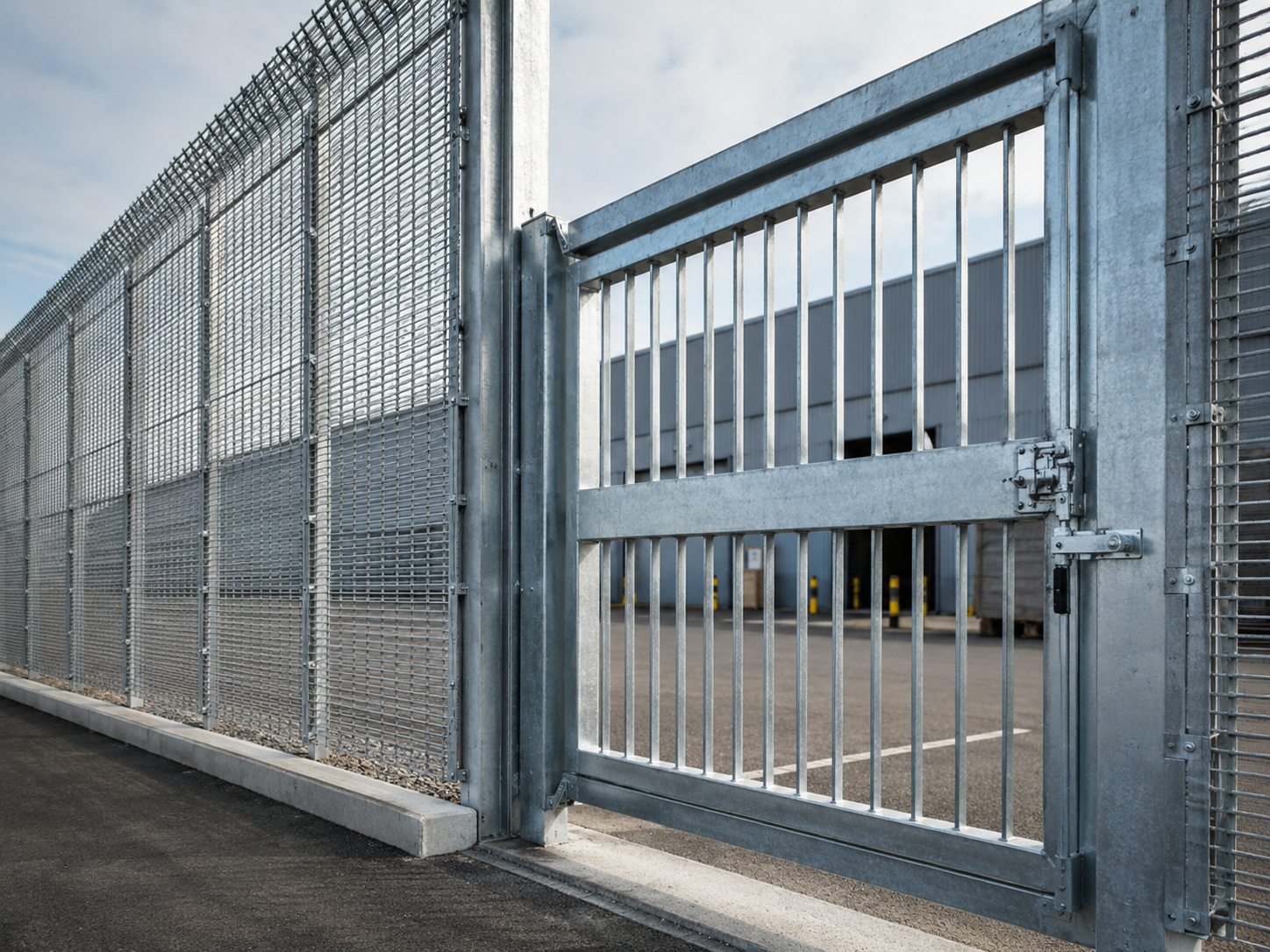
Fence panels influence more than appearance. Their spacing, top profile, rail placement, mesh opening, and connection method affect climbing difficulty, visibility, and maintenance.
High security fence panels are designed to make unauthorized access more difficult while providing a clear perimeter. Depending on the application, a security panel may use closely spaced vertical pickets, welded wire mesh, reinforced rails, or reduced openings.
Smaller openings can make climbing harder because they limit handholds and footholds. They may also reduce the ability to pass objects through the fence. Larger openings can improve visibility and airflow, but they may offer fewer physical obstacles. The correct balance depends on whether surveillance, architectural appearance, ventilation, privacy, or deterrence is the priority.
For commercial and industrial projects, panel selection should consider the likely access methods at the site. A low-risk boundary around a parking area does not require the same configuration as a restricted equipment yard. Avoid adding unnecessary features that complicate installation or create maintenance issues without solving a real security need.
Anti climb fence panels are generally characterized by geometry that reduces usable climbing points. Close mesh openings, rigid construction, and secure panel-to-post connections can make a fence more difficult to scale or tamper with.
They are useful around restricted areas, high-value storage, public infrastructure, school perimeters, and industrial facilities where unauthorized access can create safety or operational problems. However, the fence should be part of a broader approach. Lighting, camera coverage, access management, landscaping, and site procedures all influence overall perimeter performance.
Avoid relying on a product name alone. Ask for the actual panel opening, wire or profile configuration, post system, attachment method, and compatible gate design. The details determine whether the system suits the required level of protection.
A fence panel is only as secure as its supporting structure. Posts transfer loads into the foundation. Rails keep panel sections aligned. Connectors and brackets maintain the intended spacing and prevent movement at the joint.
When reviewing a specification, check these points:
Post profile and wall thickness should suit the fence height, panel weight, wind exposure, and soil conditions.
Post spacing should match the panel design and should not be changed casually during installation.
Rails should align correctly with panel connection points.
Fasteners and connectors should be compatible with the metal, coating, and outdoor exposure.
Foundations should be designed for the site’s ground conditions and local installation requirements.
End, corner, and gate posts may need stronger construction because they receive different loads.
A loose connector may create noise, movement, panel misalignment, or a potential weak point. A suitable black metal fence connector can support a stable connection between rails and posts when its profile, material, finish, and intended load are matched to the system.
Post protection also deserves attention. In outdoor locations, exposed post ends and base areas can collect moisture, debris, or damage from landscaping work. Specifying square fence covers for pole protection can help create a neater finished appearance and protect compatible square-profile fence components.
A metal security gate is usually the most active part of the perimeter and often the first point evaluated by visitors, employees, delivery drivers, and intruders. It should not be treated as an afterthought.
Gate selection starts with the traffic pattern. A pedestrian entrance, service entry, emergency access point, and truck entrance each need different clear widths, swing paths, locking arrangements, and operating methods. Consider whether the gate should swing, slide, cantilever, or remain manually operated.
The gate frame, hinges, latch, lock, access-control preparation, foundation, and closing action should all be reviewed together. A strong gate leaf with a weak latch area does not provide the desired security. Likewise, a gate that does not self-close where required by local safety rules can create a serious operational issue.
For sites that use different fence styles around different zones, keep key dimensions consistent where possible. Matching the panel profile, finish, and post system can create a more professional result and simplify future maintenance.
Outdoor fencing is exposed to rain, humidity, UV radiation, pollution, soil splash, cleaning chemicals, and, in some areas, salt-laden air. Material selection and surface treatment therefore affect both appearance and service life.
Common protection options include galvanizing, powder coating, electroplating, and paint systems. The best option depends on the base material, local exposure, expected wear, and visual requirements.
Galvanized steel is often selected for outdoor durability because its zinc coating helps protect the steel substrate. Powder coating can add color, provide an additional protective finish, and support architectural consistency across panels, posts, gates, and accessories.
A coating should be assessed as part of the complete manufacturing process. Surface preparation, coating thickness, curing, handling, packaging, installation damage, and touch-up procedures all affect real-world results. For example, cutting or drilling a finished panel on site may expose unprotected edges if the work is not properly planned.
For coastal, industrial, or high-humidity locations, specify the environment clearly at the quotation stage. The supplier can then recommend an appropriate material and finish rather than providing a generic outdoor system.
Even the best metal components can perform poorly if installation is rushed or site conditions are ignored. A reliable installation process begins before digging starts.
Confirm the legal boundary and investigate underground utilities. Check local rules for height, gate access, setbacks, pool safety, and visibility at driveways. Review slopes, drainage paths, retaining walls, and changes in grade. If water regularly pools around posts, the installation plan should address it.
Fence panels should be aligned consistently, but installers should avoid forcing a rigid panel onto uneven ground. Depending on the system, a stepped arrangement, raked configuration, or custom panel layout may be needed. The goal is a continuous, secure boundary without excessive gaps below the fence or distorted connections.
During installation, inspect:
Post plumb and spacing
Foundation curing and stability
Panel alignment
Rail engagement
Connector orientation
Gate swing or slide clearance
Lock and latch function
Coating damage caused during handling
Clearance at slopes and changes in ground level
A fence that looks straight on the first day may still develop issues if the posts are not properly set or gates are not aligned. Documentation and final inspection help identify corrections before the project is handed over.
Metal fencing is often chosen for low maintenance, not zero maintenance. A regular inspection program is simple and can prevent small problems from becoming expensive repairs.
Inspect the fence after severe weather, accidental vehicle contact, landscaping work, or major site changes. Check for loose hardware, scratched coatings, corrosion, leaning posts, bent rails, damaged gates, and vegetation growing into the panels.
Cleaning usually requires only water and a mild detergent suitable for the finish. Avoid aggressive abrasives or chemicals that may damage a protective coating. Repair coating damage promptly according to the manufacturer’s recommendations, especially on steel systems in wet environments.
For a broader material comparison, buyers can also refer to Weijiang Metal’s metal fence panels buying guide, which discusses aluminum and steel panel choices for different project needs.
A clear request for quotation helps suppliers provide comparable recommendations. Instead of asking only for a “metal fence,” include the intended application and key project details.
State the fence height, total length, panel preference, post type, gate quantity, ground condition, finish color, environmental exposure, drawing requirements, and estimated order volume. If the project requires private labeling, packaging, custom dimensions, or accessory compatibility, mention these early.
For a higher-security project, define the performance objective rather than assuming one style solves every issue. For example, explain whether the priority is discouraging climbing, controlling pedestrian access, improving perimeter visibility, protecting an equipment area, or matching a property’s architectural character.
Weijiang Metal can support custom fence hardware based on drawings, samples, dimensions, materials, finishes, and packaging requirements. This is especially useful when a project needs compatible components rather than generic parts selected independently.
A well-planned metal security fence protects more than a property line. It helps organize access, support safer operations, strengthen site presentation, and reduce the likelihood of avoidable perimeter issues.
The best solution is not always the tallest or most expensive system. It is the one that fits the site’s security objective, environmental conditions, traffic flow, installation requirements, and maintenance resources. Compare the material, panel construction, posts, connectors, gates, coatings, and foundation design as one system. With that approach, steel security fencing, anti-climb panels, decorative metal fencing, and compatible hardware can each serve the right role in a durable perimeter plan.
The best option depends on the threat level, desired visibility, site layout, and budget. Steel picket, welded panel, and anti-climb systems are common commercial choices. Evaluate the panel, posts, gate, coating, and installation together rather than selecting only by material.
Not necessarily. They are useful where unauthorized climbing is a serious concern, but they may be unnecessary for low-risk decorative or residential boundaries. The choice should reflect the property’s actual security needs and local requirements.
Aluminum can be suitable for many residential, commercial, garden, and pool-related fence applications. Its suitability depends on the design, profile, height, post system, hardware, and expected impact loads. High-impact industrial areas may require a more robust steel-based solution.
Choose an appropriate corrosion-protection system, such as galvanizing and a compatible outdoor coating. Avoid damaging the finish during installation, inspect the fence regularly, and repair scratches or exposed areas promptly.
Include the opening width, height, traffic type, operating method, swing or sliding preference, post requirements, lock or access-control needs, finish, and site conditions. Confirm that the gate is compatible with the fence panel and post system.
A basic visual inspection several times a year is sensible for most outdoor installations. Additional checks are recommended after storms, impacts, construction work, gate problems, or signs of corrosion.


