
 English
 Views: 0 Author: Site Editor Publish Time: 2026-08-16 Origin: Site


Selecting a boundary structure is a massive aesthetic decision for your property. An aluminum barrier solves major durability issues for homeowners. It requires almost zero upkeep compared to wood or wrought iron. However, picking the wrong finish can quickly cause visual clashes. It might conflict against your home’s exterior architecture. It can also highly magnify seasonal dirt in your yard.
Our goal is straightforward. We want to provide an objective, architectural comparison. We will weigh black against bronze finishes carefully. We examine practical maintenance realities alongside landscape integration. This analysis helps you make a confident, final purchasing decision. You will understand exactly how each color impacts your daily exterior aesthetic. Let us explore the nuances of these two popular choices.
Home exterior styling dictates your best color choices. You must look at your siding, trim, and roof colors first. An aluminum fence should never feel like an afterthought. It must tie the entire property together visually. You generally have two design directions. You can choose high contrast or seamless blending.
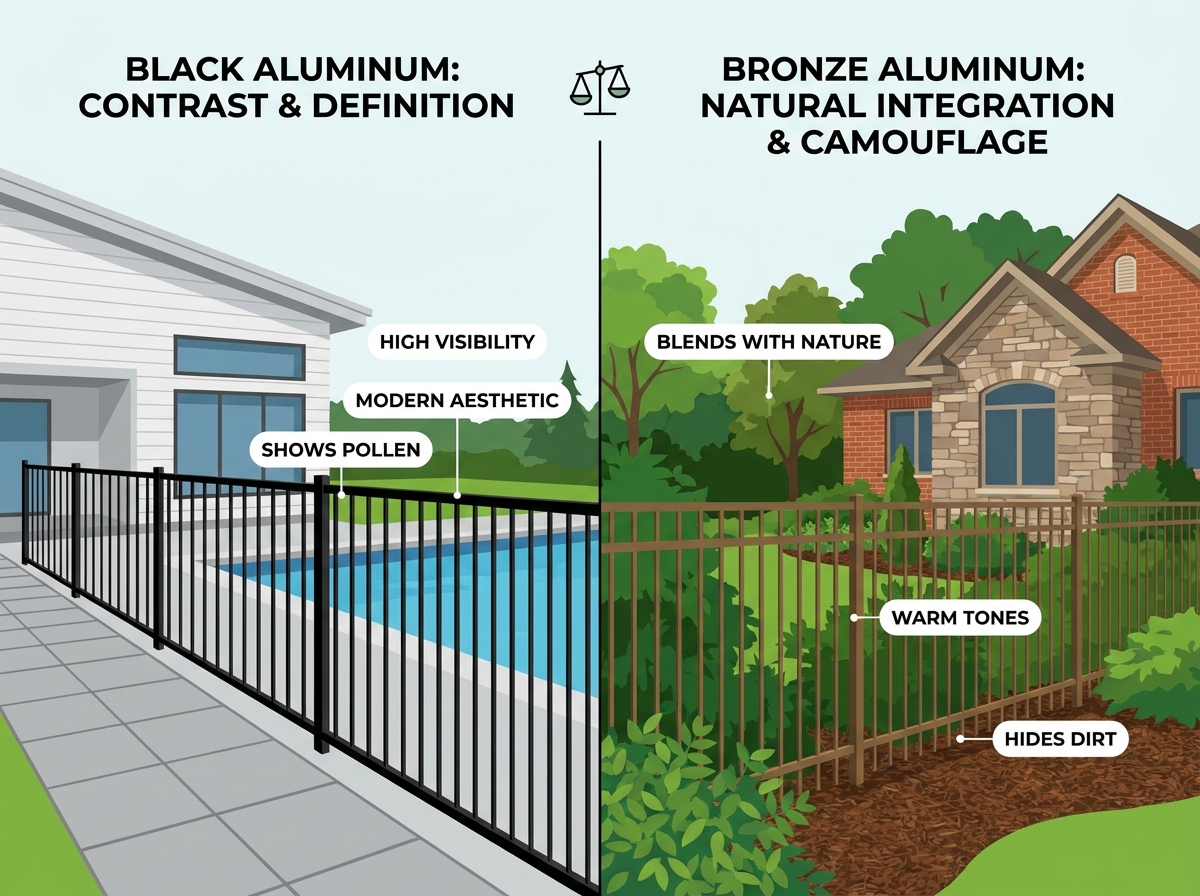
Black finishes utilize the contrast approach effectively. A black perimeter creates a sharp, formal edge around your yard. It acts as a distinct architectural frame. It draws your eye immediately toward the property line. This makes the boundary highly visible and striking.
You should pair black finishes alongside white, light gray, or modern farmhouse siding. The dark metal pops beautifully against bright backgrounds. It suits contemporary, transitional, and classic colonial home styles perfectly. Black lines mirror dark window mullions or dark roofing shingles well.
Best Practices for Black: Use it when you want to emphasize the shape of your yard. It works exceptionally well in urban or tightly knit suburban neighborhoods.
Bronze finishes take the blending approach. Bronze creates a softer, warmer transition between the home and the yard. It does not demand immediate visual attention. Instead, it complements the surrounding environment gracefully.
You will find bronze pairs perfectly alongside earth tones, brick facades, and stucco. Natural stone exteriors look incredible next to bronze metal. The brown undertones in the metal highlight the natural warmth of masonry.
This color is ideal for Mediterranean, rustic, or traditional architectural styles. In these settings, stark black might look too severe or industrial. Bronze adds a touch of classic elegance.
Common Mistakes: Do not use bronze if your home features ultra-modern, stark white siding. The warm tones can clash awkwardly against cool, minimalist palettes.
Your landscape dictates how a fence behaves visually. A barrier around a pool serves a different purpose than a boundary around a garden. You must consider both safety regulations and visual flow.
Pool safety is a massive priority for families. You need clear boundary lines. An aluminum pool fence provides exceptional security. Color plays a huge role in how it functions.
Garden enclosures require a different mindset. You want to protect your plants without ruining the view. An aluminum garden fence handles this task beautifully.
Bronze achieves the "disappearing" effect easily. It naturally recedes into wooded backdrops. It blends into dark mulch and dense foliage. When you look out into your yard, a bronze barrier seems to vanish. This makes your yard feel larger and entirely unobstructed.
Black creates the "framing" effect instead. It establishes a stark, formal perimeter. It highlights bright garden florals wonderfully. The dark metal acts as a solid backdrop. Bright pinks, yellows, and whites pop aggressively against black pickets.
Many homeowners forget about seasonal maintenance. They assume metal requires zero attention. While structurally sound, metal surfaces still collect environmental debris. Your color choice dictates your cleaning schedule entirely.
Black finishes act exactly like dark cars. They highly highlight yellow spring pollen. You will see every speck of dust. Hard water spots from lawn sprinklers stand out aggressively on black metal. If you want it to look pristine, you must hose it down frequently.
Bronze is a highly forgiving color. Its brownish undertones camouflage environmental dirt beautifully. Mud splatters blend right in. Heavy spring pollen barely registers visually. You can skip frequent cleanings without the property looking neglected.
Best Practices for Cleaning: Wash your metal perimeter twice a year. Use mild soap and a soft brush. Avoid abrasive scrubbers entirely.
Neither color is inherently "fade-proof." Sunlight degrades pigments over time. The longevity of the color depends entirely on the powder-coating process used during manufacturing. Pigment color matters far less than coating chemistry.
You must evaluate the manufacturing standards carefully. Ensure your aluminum fence panels utilize AAMA 2604 or AAMA 2605 certified powder coatings. These industry standards guarantee maximum UV resistance. They prevent chalking and fading for decades. You need these certifications regardless of whether you choose black or bronze.
Common Mistakes: Never buy uncertified, cheap metal panels. They will fade to a chalky gray within five years. Always ask your supplier for their specific AAMA certification level.
Practical logistics often drive the final purchasing decision. You must balance project timelines against neighborhood rules. Availability varies wildly between different hues.
A black aluminum fence serves as the universal baseline across the industry. Factories mass-produce black styles constantly. This massive scale means immediate availability. It usually carries lower baseline upfront costs. You can also find cheap, readily available replacement parts like post caps or hinges.
Bronze sits in a slightly different category. Many manufacturers treat basic bronze as a standard color. However, some classify specific shades as premium. Light bronze or textured bronze often carry premium tags. This classification can slightly increase the initial price per linear foot. It can also extend manufacturing lead times by several weeks.
| Feature | Black Finish | Bronze Finish |
|---|---|---|
| Industry Standard | Universal Baseline | Standard to Premium |
| Dirt Visibility | High (Shows Pollen) | Low (Camouflages Dirt) |
| Replacement Parts | Easy to Match | Shade Variations Exist |
| Lead Times | Immediate | Sometimes Extended |
Hardware compatibility is a major hidden factor. Black hardware is universal. A black latch from one brand matches a black gate from another brand perfectly.
Matching bronze hardware is notoriously difficult. Shade variations between manufacturers are huge. Some bronze looks almost black. Other bronze leans heavily toward copper. If you need to replace a gate latch on an older bronze fence, finding an exact match is frustrating. You must stick to one manufacturer for all your metal fence panels and hardware.
Homeowner Associations (HOAs) hold massive power over exterior renovations. Black is almost universally approved across suburban America. It is considered safe and traditional.
Bronze is highly favored in specific environments. It is often mandated in heavily wooded subdivisions. Historical districts frequently require bronze to maintain a natural aesthetic. Ecologically focused communities strongly prefer bronze because it blends into the tree line. Always verify neighborhood rules before purchasing materials.
You need a structured approach to make your final choice. Emotions can cloud judgment. Following a logical framework prevents expensive architectural mistakes. Follow these exact steps to select your perfect hue.
A: No. Black is typically the most affordable, standard option. Bronze is usually priced identically, though textured or specialized bronze finishes may carry a slight premium depending on the manufacturer.
A: It depends on your decking. Choose black for concrete or modern gray pavers. Choose bronze if your pool uses travertine, natural stone, or is surrounded by heavy landscaping.
A: No. UV fading is dictated by the quality of the powder coating (look for AAMA 2604/2605 ratings), not the pigment itself. Both colors will last decades if properly coated.
A: While structurally possible if using the same brand and rail specs, mixing colors is aesthetically unappealing and generally discouraged for residential properties.


